About

Dharwad is a vibrant city known for its rich culture, music, heritage, education, and beautiful surroundings.
District Overview
Dharwad is a prominent district in Karnataka, known for its rich educational, cultural and historical heritage. The twin cities of Dharwad and Hubballi form a major urban centre, with Dharwad serving as an academic and cultural hub and Hubballi as a commercial and industrial centre.
The district is currently divided into seven talukas: Dharwad, Hubballi, Kalghatgi, Kundgol, Navalgund, Annigeri and Alnavar.
The name “Dharwad” is believed to come from the Sanskrit words “Dwara” meaning “door” and “Wada” meaning “town,” reflecting its historic role as a gateway and resting place between the hills and plains.
Agriculture:
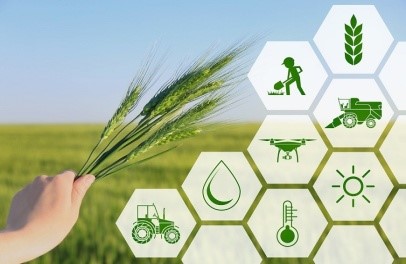
Dharwad cultivates a variety of crops like Dharwad Cotton Hybrid (DCH) which was invented by University of Agricultural Sciences, Dharwad. In addition to this, Dharwad produces varieties of channa, soya and groundnut seeds. Paddy, jowar, Alphonso mangoes and Navalur guavas are famous crops.
Soil:
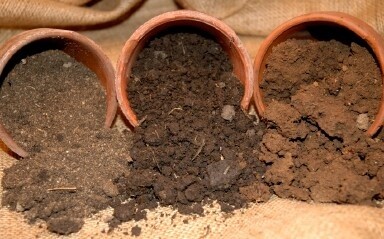
Dharwad district has a diverse range of soils, with deep and medium black soils, red soils and lateritic soils being predominant. Black soils are especially important for crops such as cotton, jowar, wheat, ragi and oilseeds, while red soils are more suitable for paddy and other crops. Lateritic soils are mainly found in the higher-rainfall western parts of the district.
CLIMATE & RAINFALL:
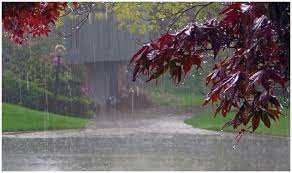
Dharwad district enjoys a moderate and healthy climate, with generally dry conditions except during the monsoon season. The district receives an average annual rainfall of around 789 mm, with about 65% occurring during the South-West Monsoon from June to September.

LITERACY:
Dharwad district has a strong tradition of education and learning, reflected in its 80% literacy rate as per the 2011 Census. Male literacy stood at 86.37%, while female literacy was 73.46%. The district’s educational institutions.
Our History
Dharwad has a rich history dating back to the Paleolithic age. From the 5th century onwards, the region was ruled by several major dynasties, including the Chalukyas, Rashtrakutas, Vijayanagara Empire, Adil Shahis, Mysore Kingdom and the Peshwas. During British rule, Dharwad emerged as an important centre of education and Kannada culture.
Badami Chalukyas:
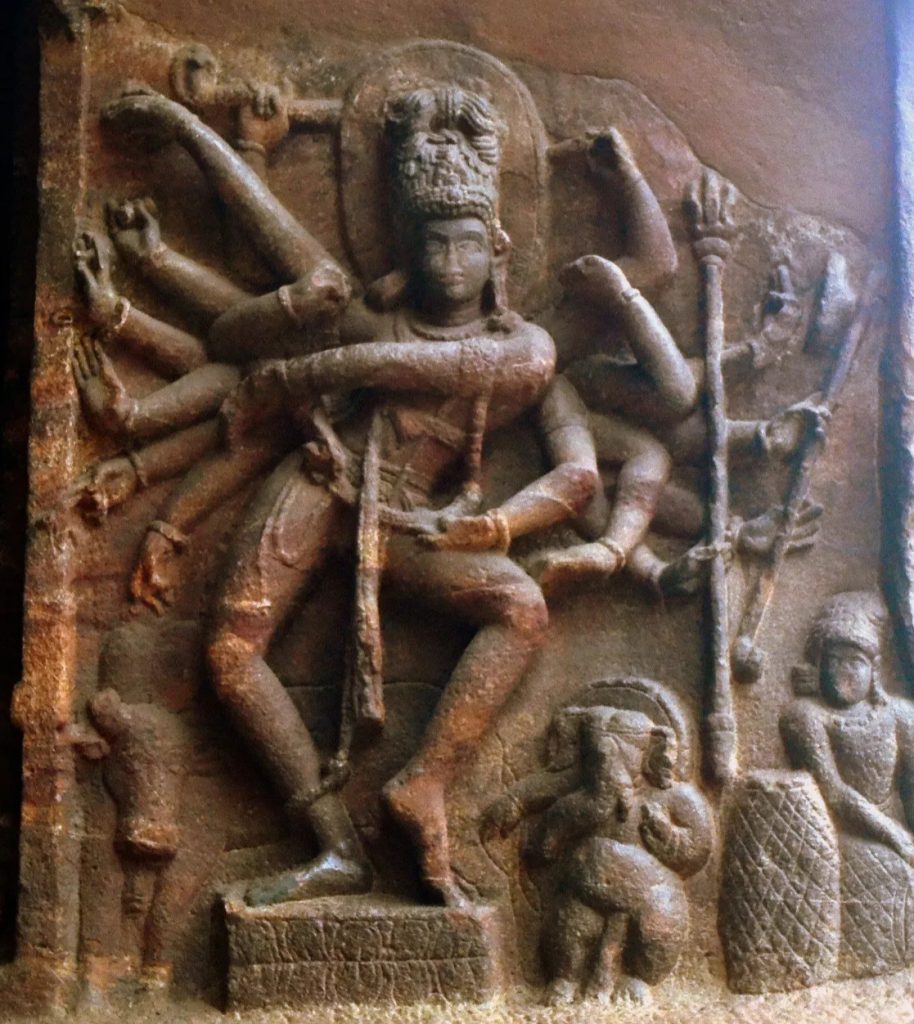
The Badami Chalukyas were among the earliest powerful dynasties to rule the Dharwad region and played an important role in shaping the history of Karnataka. Emerging as a major power in the 6th century CE, they established Vatapi (present-day Badami) as their capital and gradually expanded their influence across the Deccan.
Under celebrated rulers such as Pulakeshin I, Kirtivarman I and Pulakeshin II, the Chalukyas strengthened their kingdom through military achievements and effective administration. Pulakeshin II was their most renowned ruler, extending Chalukya influence across large parts of the Deccan and successfully resisting the northward expansion of Emperor Harshavardhana.
Rashtrakutas
The Rashtrakutas were one of the major dynasties that ruled parts of the Dharwad region and the Deccan during the early medieval period. They emerged as a powerful kingdom in the 8th century CE, succeeding the Badami Chalukyas and establishing their influence across large parts of Karnataka.
Under rulers such as Dantidurga, Krishna I, Govinda III and Amoghavarsha I, the Rashtrakuta Empire reached great political and cultural prominence. Govinda III was known for his military achievements, while Amoghavarsha I was a celebrated patron of Kannada literature, art and learning.
PHYSICAL CHARACTERISTICS
Latitude
Dharwad district is situated between 15°02′ and 15°51′ North latitude. This places the district in the northern part of Karnataka, with its varied landscape extending across the transitional region.
Longitude
Dharwad district lies between 73°43′ and 75°35′ East longitude. It is located in the western part of northern Karnataka and forms a transition zone between the Western Ghats and the Deccan plateau.
AREA
Dharwad district covers an area of approximately 4,263 square kilometres. It is situated in the western part of northern Karnataka and forms an important geographical region.
Major Towns & Cities
Hubballi
Hubballi is a major commercial and industrial centre of North Karnataka, known for trade, agriculture, industries and connectivity.
Dharwad
Dharwad is a renowned educational and cultural centre of North Karnataka, known for its rich traditions in music, literature and art.
Navalgund
Navalgund is a historic town in Dharwad district, known for its traditional weaving and cultural heritage, particularly the GI-tagged.
Kundgol
Kundgol is a historic town in Dharwad district, known for its ancient Shambulingeshwara Temple and rich cultural heritage. It is also the birthplace of renowned Hindustani musician Sawai Gandharva.
Population Overview
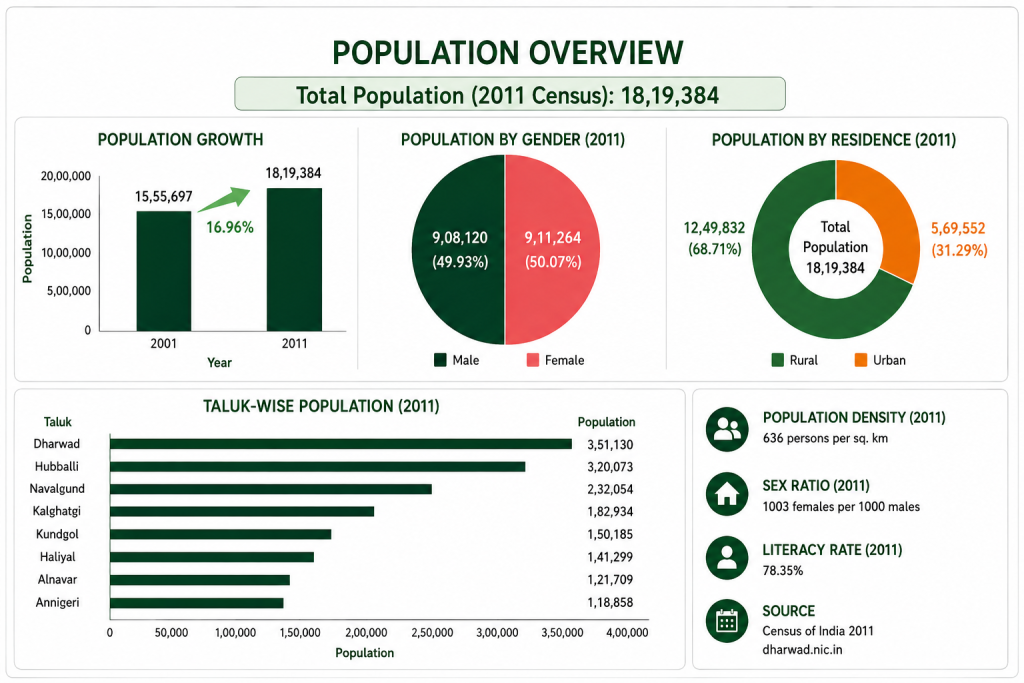
Dharwad district had a population of 18,47,023 according to the 2011 Census, comprising 9,37,206 males and 9,09,817 females. The district has a diverse population distributed across urban and rural areas, with Hubballi–Dharwad forming the major urban centre. The district recorded 2,19,942 children in the 0–6 age group and 13,01,664 literates, reflecting its strong demographic and educational foundation.
The district’s population is spread across its taluks, towns and villages, with agriculture remaining an important source of livelihood in rural areas. Hubballi and Dharwad have developed as major centres for education, commerce, industry, healthcare, transport and services.
Dharwad is also known for its rich cultural traditions, music, literature and academic institutions, contributing to its distinctive social character and development.
Statistics
| Indicator | Statistics |
|---|---|
| Area | 4,260.42 sq. km |
| Population (2011) | 18,47,023 |
| Male Population | 9,37,206 |
| Female Population | 9,09,817 |
| Children (0–6 years) | 2,19,942 |
| Literates | 13,01,664 |
| Revenue Villages | 379 |
| Gram Panchayats | 127 |
| Major Urban Centre | Hubballi–Dharwad |
| Talukas | Dharwad, Hubballi, Kalghatgi, Kundgol, Navalgund |
Revenue & Financial Overview
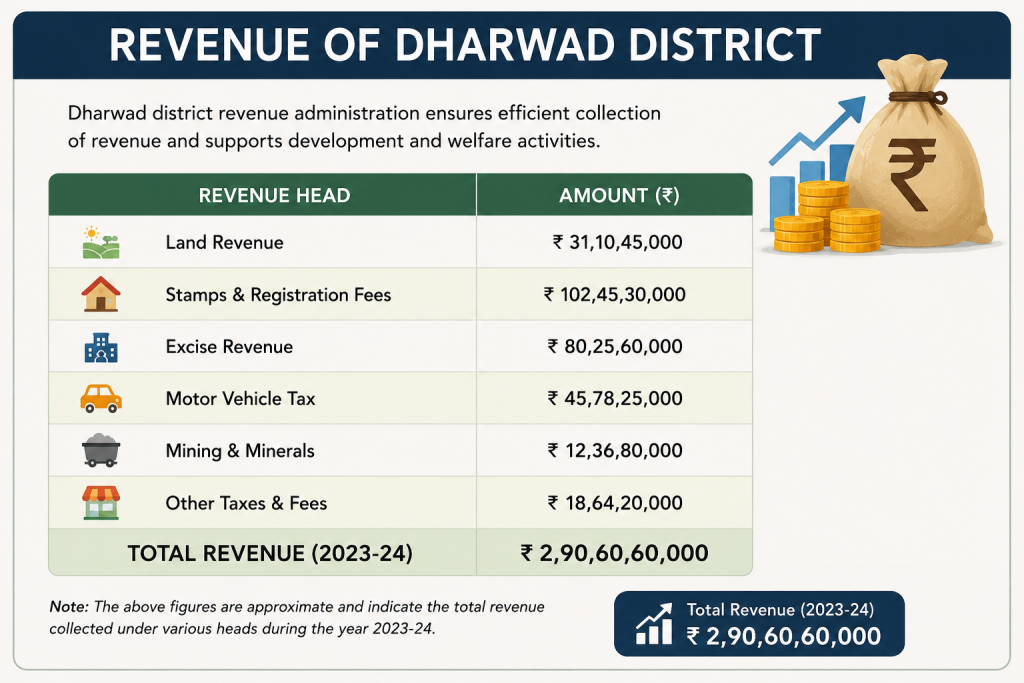
Dharwad district’s revenue administration plays an important role in supporting local governance, public services and regional development. Revenue is generated through various sources, including land revenue, stamps and registration fees, excise revenue, motor vehicle taxes, mining and minerals, and other taxes and fees. These revenues contribute to the functioning of government departments and help support essential infrastructure, welfare programmes and development activities across the district.
The district’s diverse economic activities, including agriculture, trade, industry, transport, real estate and services, contribute to its overall revenue base. Effective revenue collection and administration help strengthen the district’s financial resources and support sustainable growth. The revenue system also plays a key role in maintaining land records, collecting statutory fees and ensuring efficient delivery of government services to citizens.